










Today, we’re making a sweet but slightly exotic fruit compote for baby: pineapple and apple compote.
The idea is to enjoy pineapple’s sweet-tart flavor while making it easy to digest and very pleasant in texture thanks to the apple.
The apple brings the sweetness, flavor, and texture babies love, while the pineapple adds that little vacation-like taste that makes a nice change from classic fruit compotes.
This is a no-sugar-added recipe (apart from the fruit’s natural sugars, of course), with fruit that is well cooked and finely blended, so this compote can be suitable around the start of weaning (in small amounts, according to your pediatrician’s advice).
This compote can be served:
- as an afternoon snack,
- as a lunchtime dessert,
- or with yogurt when baby is a little older.
Ingredients
(for about 2 x 3.5 oz portions / 2 portions of 100 g)
How to make pineapple compote for baby
Prepare the pineapple
- If using fresh pineapple:
- cut off both ends,
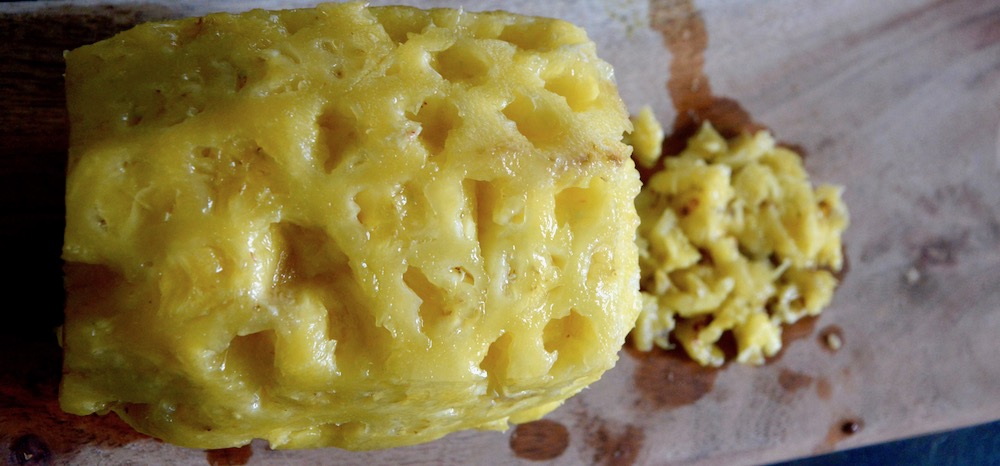
- stand it upright on a cutting board, then remove the skin by following the shape of the fruit,
- carefully remove the small “eyes” (the hard spots),
- cut the pineapple lengthwise into four pieces, then remove the fibrous core from the center,
- weigh out 3.5 oz of flesh (100 g) and cut it into small pieces.
- If using frozen pineapple:
- weigh out 3.5 oz of pieces (100 g),
- you can let them thaw for a few minutes or cook them directly.
Prepare the apple
Wash and peel the apple, remove the core and seeds, then cut the flesh into pieces.

Steam cooking
Place the apple and pineapple pieces in the steamer basket and cook for about 8 to 10 minutes, until everything is very tender. Save a little cooking water to adjust the texture of the compote after the first blend.
Blending the compote
Place the cooked fruit in the blender bowl. Blend for a good while until you get a very smooth compote. If the texture is too thick, add a little cooking water or mineral water, spoonful by spoonful, until you reach the desired consistency for baby.
For babies just starting solids, keep the compote very smooth.
Later on, you can blend it a little less to keep a thicker texture.
Enjoy your meal, baby!
How to store apple pineapple compote for baby
- In the refrigerator:
In a clean airtight container, for about 2 to 3 days. - In the freezer:
You can pour the compote into ice cube trays or small baby food jars, tightly sealed, and store it for about 3 to 4 months.
Thaw it in the refrigerator the night before serving.
More ideas with pineapple
For older babies: you can keep a small portion of the cooked pineapple blended for less time, or offer a few tiny very soft pieces if baby is comfortable with textures.
Apple pineapple banana compote: add a piece of very ripe banana when blending for an even creamier texture.
Apple pineapple pear compote: perfect for softening the pineapple flavor even more if baby is sensitive to acidity.
Frequently asked questions
At what age can I offer pineapple to my baby?
Pineapple can be offered at the start of weaning, in small amounts, well cooked and finely blended, especially at first. Since it is a somewhat fibrous and sometimes tangy fruit, it is best to start around 6 months, with very small portions mixed with a fruit like apple, and observe baby’s reaction.
Should pineapple always be cooked for baby?
For babies, it is preferable to serve pineapple cooked and blended so it is easier to digest and very soft. When baby is older and comfortable with pieces (around 9–12 months depending on their pace), you can offer a little very ripe raw pineapple, cut into small, very soft pieces. Go slowly the first time to make sure everything goes well.
Fresh, frozen, or canned pineapple: which is best?
Best option: ripe fresh pineapple.
Very convenient: plain frozen pineapple (100% pineapple, with no added sugar), perfect for making quick compotes.
Avoid for baby: canned pineapple in sweetened syrup, because it is very high in added sugars. Even rinsed, it remains sweeter than plain fruit!
Do I have to add apple?
No, you can make a compote with pineapple only, but it may be runnier and a little more acidic. Apple adds softness, sweetness, and helps create a very smooth texture. You can also vary it with pear, banana, mango… The important thing is to have already offered each fruit separately before mixing them.
How much compote should I offer baby?
In general, about 3.5 oz of compote (100 g) is a good amount for a 6-month-old baby (the equivalent of a small store-bought baby food jar). After that, adapt mostly to baby’s appetite: some babies will eat a little less, others a little more. If baby is still very hungry after the compote, it is better to increase the portion of savory purée or starches at the next meal!
The pineapple compote is still fibrous. What should I do?
Pineapple is a fibrous fruit. To get the smoothest possible texture, you should:
carefully remove the hard central part (the “core”),
remove the pineapple “eyes,”
blend for a long time with a little cooking juice or water,
if needed, pass the compote through a small fine-mesh strainer or sieve.
For babies who are very sensitive to textures, you can start with a larger proportion of apple than pineapple.
Can I cook pineapple in a saucepan instead of steaming it?
Yes, it is possible. Cut the pineapple and apple into small pieces and cook for about 8 minutes in a saucepan over medium-high heat, until very soft. Then blend (with a little water if needed) to adjust the texture.
Baby developed redness after eating pineapple. Is that normal?
Pineapple can sometimes cause redness around the mouth or on the skin because of its acidity and because it releases histamine. If the patches are significant, spread, or are accompanied by other symptoms (swelling, breathing difficulties, vomiting, etc.), consult a doctor or emergency medical service.
If it is only mild redness, you can set pineapple aside for a while and ask your pediatrician’s advice before offering it again, in a very small amount.


Your baby may also like
Gingerbread Donut “Christmas Wreath” for Babies and toddlers
05/18/2026Pear, banana and grapefruit baby puree recipe (from 6 months)
10/04/2016Spinach, Potato, Mozzarella and Parmesan Sticks for Babies
05/20/2026Baby Rice Pudding with Banana and Vanilla
05/19/2026Vegetable and Cheddar Quesadillas for Babies
05/19/2026Persimmon and apple compote for baby (From 6 months)
04/18/2025Small Hazelnut Milk Brioche Rolls for Babies
05/20/2026Quick Vegetarian Blanquette for the Whole Family (From 18 Months)
05/16/2026Roasted cauliflower and corn over potato velouté (baby & family)
05/18/2026Carrot and ham baby flans (From 10 months)
04/22/2025